After months of research, collaboration, and classroom testing across four European partner countries, the 4C-FUTURE project is proud to announce the publication of its core methodology. This comprehensive document is the heart of everything we do — and it’s now ready to help teachers bring the 4Cs to life every day in their classrooms.
What Are the 4Cs — and Why Do They Matter?
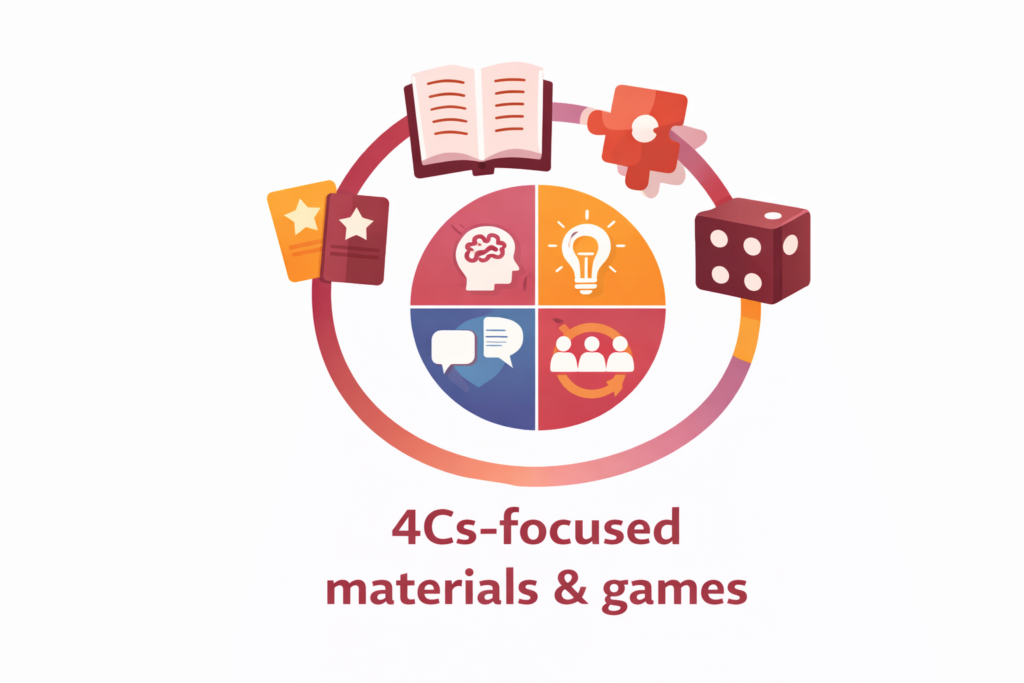
The world students are growing up in demands more than subject knowledge. Employers, researchers, and educators worldwide agree that four competences are essential for thriving in the 21st century:
🔍 Critical Thinking
🤝 Collaboration
💬 Communication
✨ Creativity
These skills — the “4Cs” — are not easily taught through traditional methods. They require active, meaningful experiences where students do, reflect, and grow. That’s precisely what the 4C-FUTURE Methodology is designed to make possible, for every teacher and every classroom, regardless of subject or prior experience with games or gamification.
How the Methodology Works
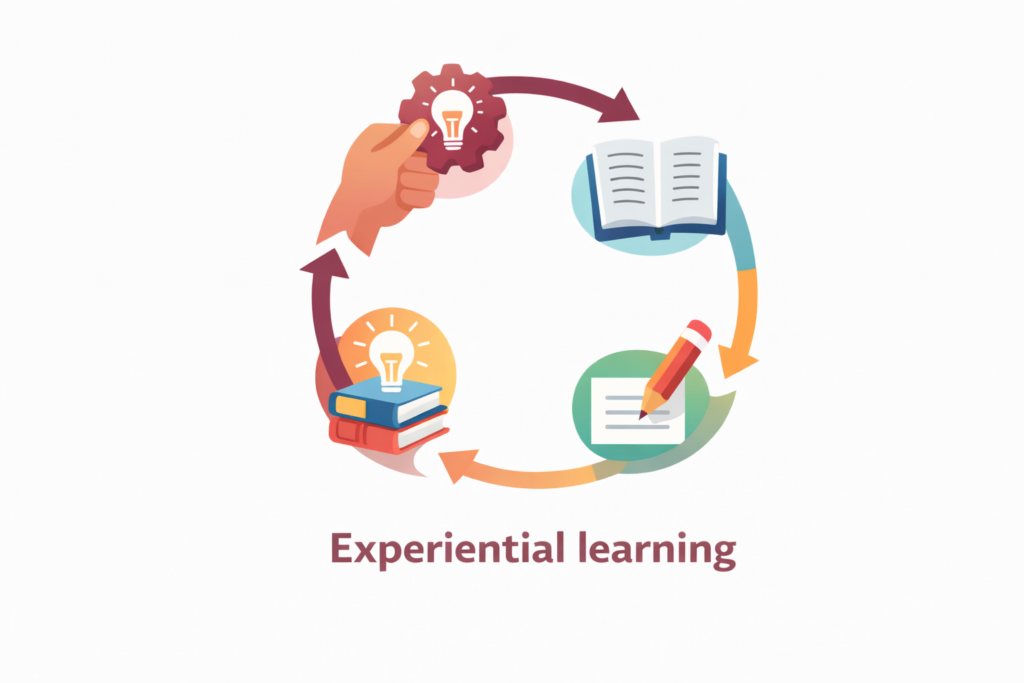
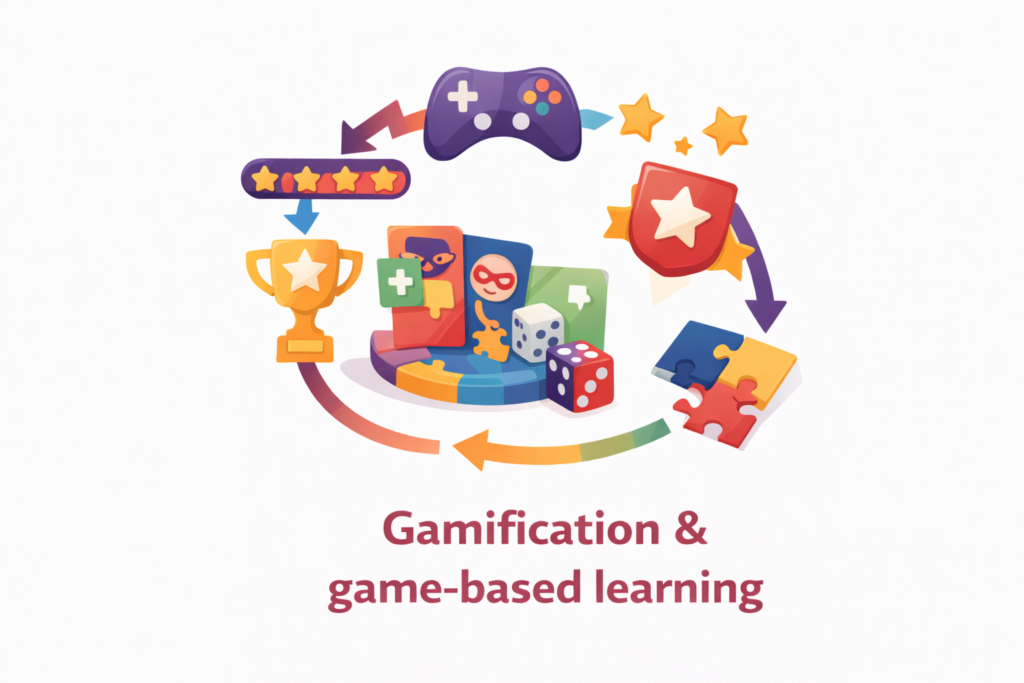
The methodology is built on three interconnected pillars. Experiential learning puts students at the centre of their own learning through doing, reflecting, and making sense of real experiences. Gamification uses missions, storylines, and feedback loops to keep students engaged and motivated to practise the 4Cs. Game-based learning goes further — through role-plays, simulations, escape rooms, and board games, students apply the 4Cs in action, in safe, playful contexts that feel genuinely meaningful.
Woven throughout is a strong commitment to digital and media literacy — helping students think critically about information, communicate responsibly online, and collaborate effectively in digital environments.
What’s Inside: Five Steps from Theory to Practice
The methodology is structured so teachers can move confidently from understanding the framework to implementing it with confidence:
01 – 4Cs Foundations
An accessible introduction to why critical thinking, creativity, communication, and collaboration matter — and how gamification and experiential learning deepen them.
02 – Teaching Strategies & Tools
Practical facilitation guidance, reflection methods, group work strategies, and age-differentiated approaches for students aged 13–15 and 15–17.
03 – Ready-to-Use Activities
A rich collection of classroom activities covering all four competences — from media literacy exercises and debate formats to collaborative design challenges.
04 – Game Creation Toolkit
Step-by-step guidance for designing educational games — LARPs, board and card games, escape rooms, simulations, and maker challenges. Teachers and students become game creators, not just players.
05 – Assessment
Self-assessment tools and rubrics to track students’ growth in the 4Cs, with reflection frameworks that assess both learning outcomes and the learning process itself.
A Taste of the Activities
The methodology includes detailed, classroom-ready examples that teachers can adapt and use immediately:
| 🔎News DetectivesStudents hunt for bias and fake news in real time, using professional verification tools to evaluate evidence and justify their conclusions. | 🏙️Future StorytellersDesigning the school of 2050 while tackling real challenges like AI and climate change — sparking imagination and collaborative creativity. |
| 🌍Mini UN DebateA high-stakes simulation where students defend critical interests, practising structured speaking, argumentation, and active listening. | 🔓Escape Room ChallengeA collaboration mission where unlocking the final puzzle requires every student’s brainpower — building teamwork, resilience, and shared problem-solving. |
What Makes 4C-FUTURE Different?
Most game-based learning approaches ask students to play games. 4C-FUTURE goes a step further: students and teachers are also guided to design their own learning games. This transforms learning from a passive experience into an act of creation — deepening ownership, building metacognitive skills, and making the 4Cs felt rather than just taught.
Who Is It For?
The methodology is designed primarily for teachers working with students aged 13–17, across any subject area. Whether you are an experienced practitioner of game-based learning or completely new to the idea, the document offers scaffolding at every level — theoretical grounding for those who want it, and practical tools for those who want to jump straight in. You can first see the comprised version of 4C-FUTURE Methodology to discover what the entire document covers.
What’s Next?
The methodology is the foundation for everything that follows in the 4C-FUTURE project. Upcoming outputs include dedicated training for teachers, a collection of ready-made educational games, and digital resources — all rooted in the framework you’ll find in these pages.
Explore the Full Methodology
Download the document and find all project resources HERE